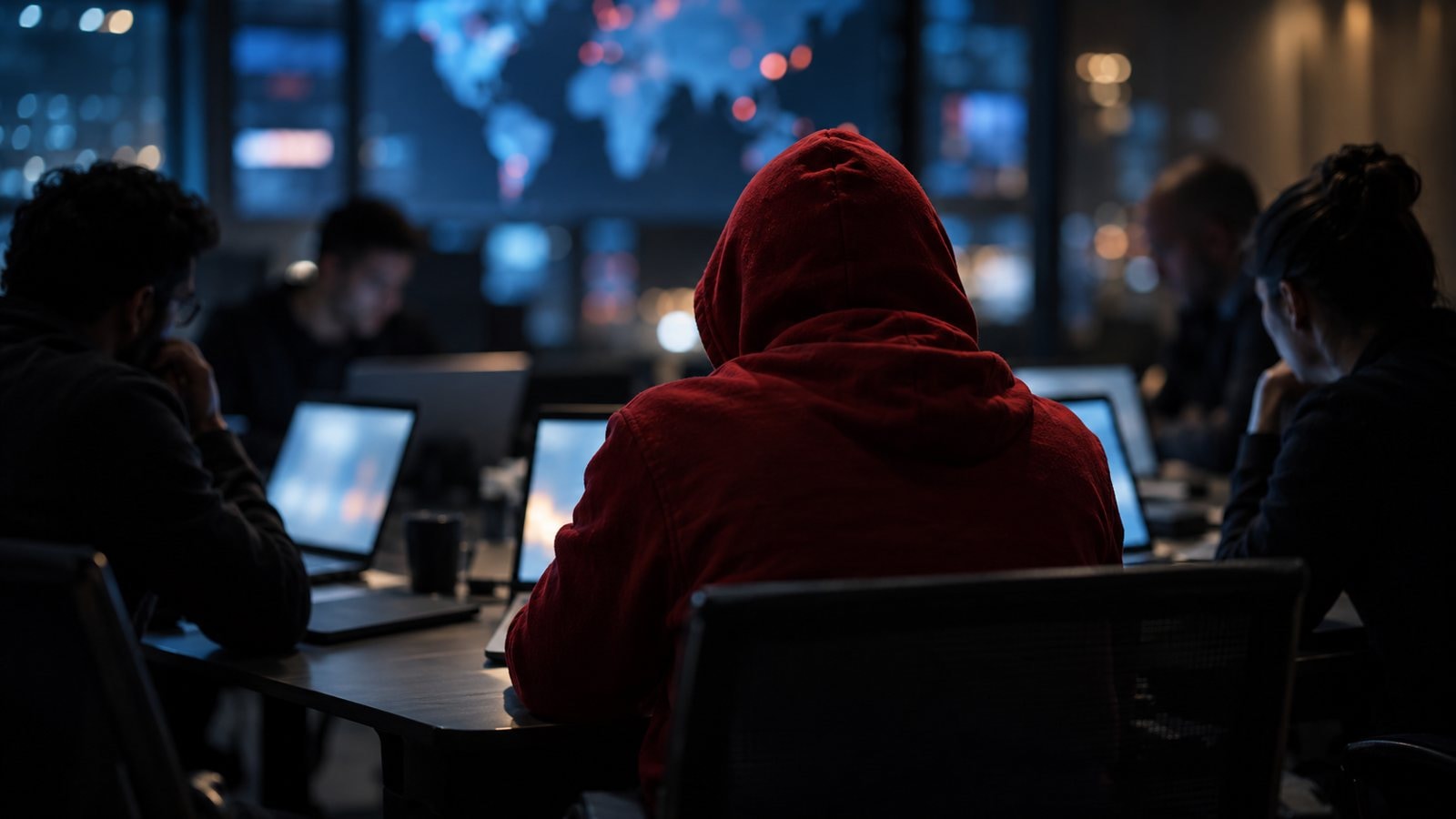

Deepfake fraud uses AI-generated faces, voices or messages to impersonate people and obtain transfers or approvals. Generated messages, cloned voices and manipulated video are already used in fraud. The US FBI has also documented how these methods reduce the effort needed to approach potential victims (p.18).
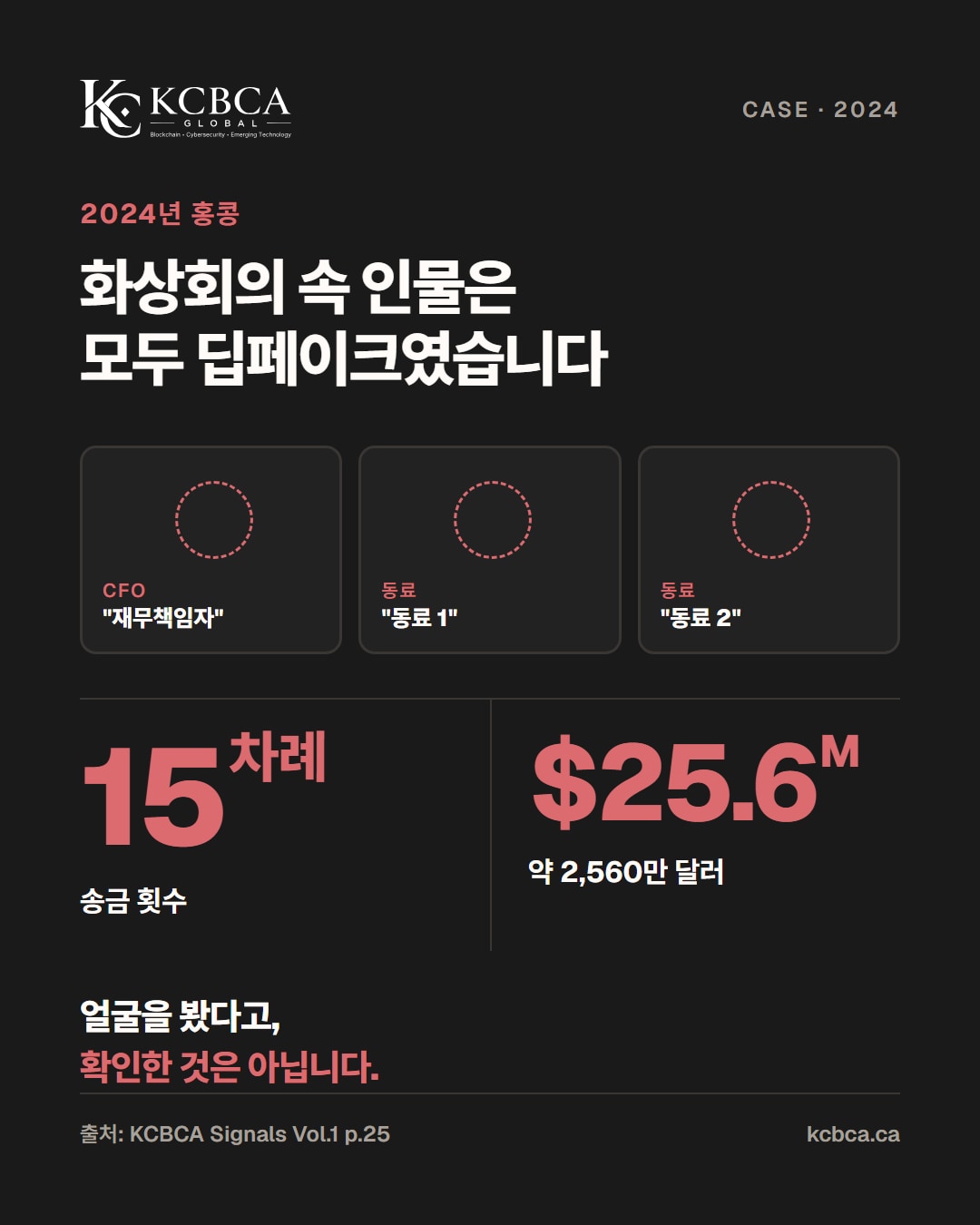
In Hong Kong in 2024, an employee trusted instructions from a chief financial officer (CFO) and colleagues in a video meeting and sent about $25.6 million across 15 transfers. All the people on screen were deepfakes (p.25). The central response is to verify requests independently through a different channel, rather than relying on faces or voices (p.25).

Impersonation reaches corporate transfers
Deepfake voice phishing is familiar through calls imitating relatives or acquaintances. But deepfake fraud also reaches corporate transfers. The employee in the Hong Kong case accepted the transfers as legitimate instructions after seeing the CFO and colleagues together on screen (p.25).
A contribution to KCBCA Signals argues that the longstanding financial assumption that 'a valid signature means valid consent' is being challenged. Exchange withdrawal rules, multisignature operations and contract law all rely on this assumption (p.25). If the person approving was deceived despite completing every approval step, what does the signature prove?
Community messages and convincing video
The following is a hypothetical example offered by the contributor. A message apparently from an administrator leads to a familiar-looking website and asks users to 'approve' something to join an event.
It may even include a convincing video featuring someone from the project (p.18). This combines messenger phishing with deepfake video.
The more reassuring clues overlap, the easier it is to overlook what is actually being authorized. The contributor says a familiar face in a video should not, by itself, be a reason to sign (p.18).
What to check even when private keys are protected
A token approval grants another address permission to spend a particular token. Even with a protected private key, a user can be deceived into granting harmful spending permissions.
Ethereum's security guidance also warns about excessive spending approvals (p.18). What appeared to be a routine step may have granted much broader authority.
The contributor therefore asks three questions: what made the request seem genuine, could it be checked independently, and did the wallet explain what the approval permitted (p.18)? The contributor adds that wallets should distinguish limited permissions from broad ones (p.19).

Executive impersonation and fraudulent employment
According to the contribution, North Korea-linked groups are already impersonating executives and planting fake IT workers in cryptoasset companies. AI agents have also begun holding keys and executing transactions directly (p.25).
The following is a hypothetical scenario presented by the contributor. Coordinated AI-assisted impersonation targets authorized signers at a won-denominated stablecoin issuer or a large custodian.
No code is breached, every transaction is cryptographically valid, and every approval comes from the expected faces and voices. A court would then have to decide who bears the loss when the protocol, procedures and people all said 'yes' (p.25).
Verification habits for individuals and organizations
Preventing deepfake fraud depends more on verification habits than on a single detection tool. The table summarizes methods from the contributions.
| Habit | What to do | Who |
|---|---|---|
| Verify through a separate channel | Recheck through a known number or official channel, rather than the call or messenger where the request arrived (p.25) | Individuals and organizations |
| Time-lock large transfers | Apply time locks and automatic circuit breakers to large transfers (p.25) | Organizations |
| Check official channels | Verify addresses and requests in official notices instead of trusting a familiar name in a message (p.18-19) | Individuals |
| Read the approval | Before signing, check who receives permission, for what and to what extent (p.18-19) | Individuals |
| Practice for authorized fraud | Simulate fraud that passes normal approvals, as well as hacking (p.25) | Organizations |
| Specify responsibility for AI actions | Define liability for AI agent actions in contracts in advance (p.25) | Organizations |

If an AI assistant can access a wallet
AI agents with wallet access may eventually make decisions for people. An agent that reads a malicious page and trusts its instructions can prepare an unwanted transaction.
If a person approves based only on the agent's summary, the original problem may remain hidden (p.19). Attempts to change AI behavior using instructions planted in external material are called prompt injection (p.19).
The UK's National Cyber Security Centre (NCSC) recommends limiting actions through safeguards outside the model, granting necessary permissions only for the necessary period, and maintaining meaningful oversight (p.19). Explaining activity does not require granting control of a wallet (p.19).
When you suspect fraud
Act immediately if you have already sent money in a deepfake scam. Korea's Financial Supervisory Service advises voice phishing victims to call the police at 112, the Financial Supervisory Service at 1332, or the sending or receiving financial institution's call center immediately to report the loss and request suspension of payments from the account.
Source: Financial Supervisory Service, “How to respond to voice phishing losses”
Frequently asked questions
Q1. How can deepfake fraud be recognized?
Verification through a separate channel is more reliable than merely looking for awkward video or audio (p.25). End the call carrying the request and call back using a number you already know.
Q2. Can seeing a face in a video call still be deceptive?
Yes. In the 2024 Hong Kong case, the CFO and colleagues in the video meeting were all deepfakes (p.25). In deepfake video-call fraud, seeing a face alone does not establish verification.
Q3. Is a crypto wallet safe if its private key is protected?
No. A deceptive token approval gives another address permission to spend a particular token (p.18). Read the approval scope carefully before signing.
At a glance
- Deepfake fraud uses impersonated faces, voices and messages to induce transfers and approvals
- In Hong Kong, about $25.6 million was sent across 15 transfers after a video meeting
- Token approvals can surrender control of assets even when private keys are protected
- Verify requests through a separate channel instead of relying on faces and voices
Faces and voices are not grounds for approval. Building a habit of checking through another channel before transfers and signatures is the most reliable way to prevent deepfake fraud.
Read KCBCA Signals Vol.1 Issue 1 in full
References: KCBCA Signals Vol.1 Issue 1; Jun Ahn (MemeCore CEO), p.18-19; Heo Wang (lawyer at Wins Law Firm), p.24-25.